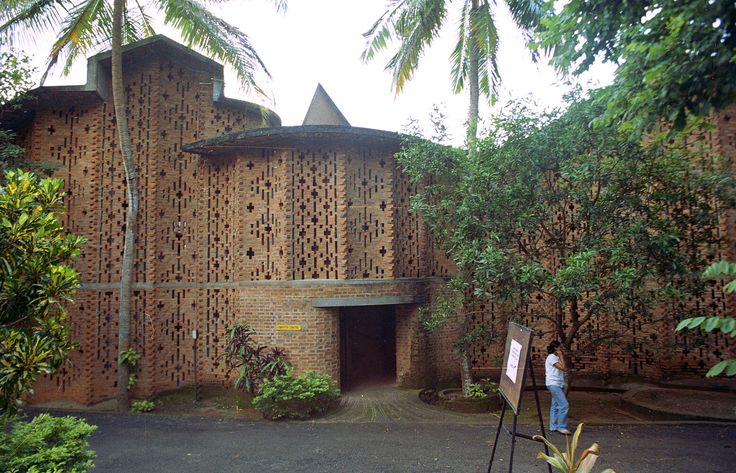
Concrete built the modern world. It also built a climate crisis. The material that created the Burj Khalifa, the Three Gorges Dam, and the highways connecting every major city produces 8% of global carbon emissions which is more than aviation. We cannot unbuild what we have built. But we can stop building what we have been building. This step isn’t a choice but rather a necessity and the Oja’s intention is to affirm it through this article with the most viable alternatives.
GEOPOLYMER CONCRETE: THE INORGANIC POLYMER SHIELD
Geopolymer concrete (GPC) eliminates Portland cement by using industrial waste rich in silicon and aluminum, such as fly ash (from coal power plants) or ground granulated blast-furnace slag (from steel manufacturing) and mixes it with an alkaline chemical activator (typically a calibrated blend of sodium silicate and sodium hydroxide).
The Structural & Material Advantage
- Zero-Lime Matrix: Because there is no free calcium hydroxide, the cured concrete cannot undergo sulfate attacks or acid leaching.
- Microscopic Density: The polymer chains pack together tightly, reducing internal microscopic pores from the standard approx 5% down to less than 1%. This prevents water, industrial acids, or ocean salt from penetrating the surface and rusting the steel rebar inside.
- High-Heat Survival: GPC is thermally stable, retaining over 90% of its structural load capacity at up to 800 °C.
Logistical Perspective & Civic Application
This material shifts our relationship with industrial waste. Instead of letting toxic fly ash pool in hazardous landfills, civil engineering upcycles it into high-performance public infrastructure. GPC is highly effective for building deep marine sea walls, wastewater treatment plants, and airport runways.
When used in public transit, rigid geopolymer pavements do not form deep ruts during summer heatwaves like asphalt does. They resist winter de-icing salts without pitting, cutting long-term municipal road repair budgets and minimizing traffic disruptions for local communities.
Real-World Case Study
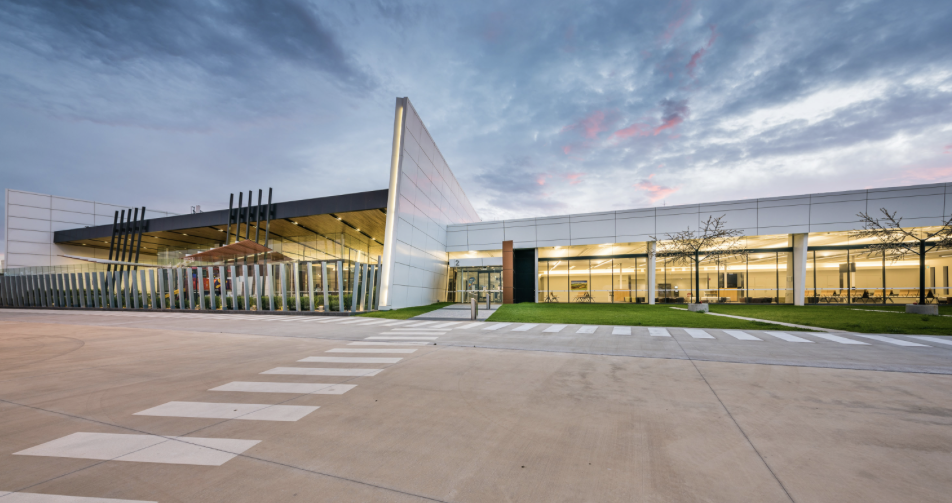
The Brisbane West Wellcamp Airport in Australia serves as a major commercial proof of concept. Builders used over 40,000m³ of geopolymer concrete for the heavy-aircraft taxiways and turning nodes. This project saved over 8,600 tonnes of carbon emissions and proved that green alternatives can reliably handle the immense impact forces of commercial aviation.
RAMMED EARTH: THE LITHIFIED EARTHWORK
Rammed earth is a modern engineering evolution of an ancient building technique. The material uses a precise, raw mixture of local subsoil containing gravel 15-30%, sand 35-50%, and silt/clay 10-25%. In modern civil engineering, it is often “stabilized” by adding a minimal amount 5-10% of cement or lime to guarantee water resistance.
The process relies on mechanical compression rather than intense chemical reactions. The damp, loose earth is poured inside rigid steel or timber formwork in shallow layers 10-15cm. Workers then use pneumatic rammers to compress the soil to roughly half its original volume. This forces out microscopic air pockets and locks the mineral aggregates into a dense, interlocking matrix with a dry density exceeding 2000kg/m³.
The Structural & Material Advantage
- Thermal Mass Management: Rammed earth has high thermal mass but a moderate thermal conductivity. It acts as a natural thermal battery. It absorbs harsh external heat during the day, keeping interiors cool, and slowly radiates that stored warmth inward during the cold night.
- Acoustic Isolation: Monolithic rammed earth walls provide excellent acoustic insulation, making them highly effective for dampening noise.
- Zero Transport Burden: Because the primary aggregate is dug directly from the building site during foundation excavation, it eliminates the emissions, fuel costs, and logistics of hauling gravel and sand.
Logistical Perspective & Civic Application
Rammed earth connects a building directly to its local landscape. The resulting walls display organic, visible strata layers that match the color and geology of the regional soil. For public buildings like municipal libraries, community wellness clinics, and highway sound barriers, it creates a warm, tactile aesthetic that reduces stress and improves human well-being.
By utilizing local subsoil, projects bypass global shipping dependencies, keeping construction budgets within local economies and hiring regional labor.
Real-World Case Study
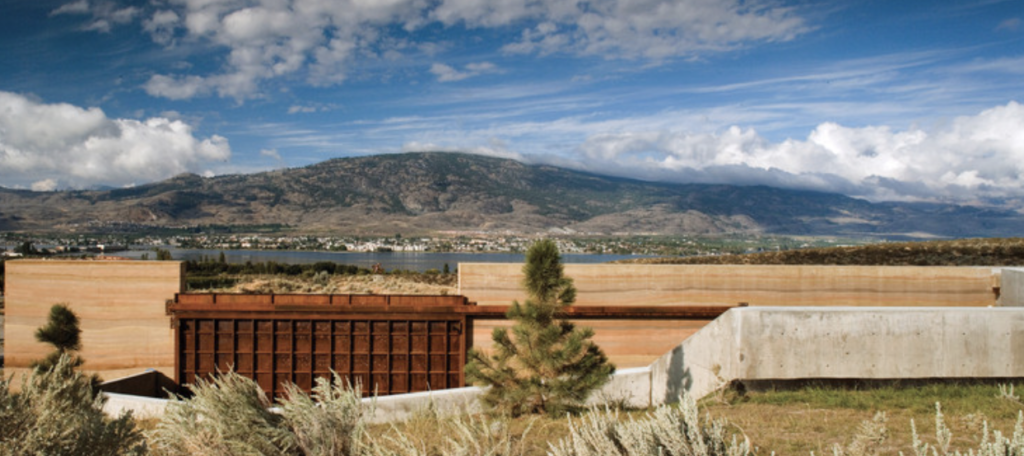
The Nk’Mip Desert Cultural Centre in British Columbia, Canada, features one of the longest rammed earth walls in North America. Built using local desert soils, the wall acts as a natural thermal buffer against extreme desert temperature swings, while its natural textures honor the deep ties between the indigenous community and the local landscape.
HEMPCRETE: THE CARBON-NEGATIVE BIOCOMPOSITE
Hempcrete is a lightweight, non-structural biocomposite material rather than a direct, high-strength structural replacement. It is made from the hemp hurd: the woody, silica-rich inner core of the Cannabis sativa plant stem, mixed with a hydrated lime binder calcium hydroxide and water.
Hempcrete cures over time through atmospheric carbonation. As the wet lime binder dries, it continuously absorbs carbon dioxide from the surrounding air. This chemical reaction transforms the calcium hydroxide back into solid calcium carbonate (limestone), locking the carbon away for the lifetime of the structure. Because hemp grows rapidly and absorbs large amounts of CO2 during its lifespan, hempcrete sequesters more carbon than is emitted during its production, making it truly carbon-negative.
The Structural & Material Advantage
- Elite Thermal Barrier: Hempcrete has an exceptionally low thermal conductivity which is nearly twenty times more efficient than traditional concrete. It combines insulation and structure into a single monolithic layer.
- Hygroscopic Breathability: The porous structure of the hemp hurds allows the material to absorb moisture from internal air when humidity is high and release it when the air dries. This prevents interior condensation and naturally eliminates toxic mold spores.
- Low Structural Mass: Weighing roughly 300 to 400kg/m3 (about one-seventh the weight of traditional concrete), it lowers the overall structural dead load of a building, allowing for lighter, less expensive foundation designs.
Logistical Perspective & Civic Application
Hempcrete offers an excellent solution for building healthy indoor environments, particularly for public housing and school buildings. Standard concrete walls often trap indoor moisture, creating damp environments that contribute to childhood asthma and respiratory illnesses.
Hempcrete walls create a self-regulating indoor environment that maintains healthy humidity levels without requiring constant HVAC operation. It is used as an insulating infill material cast around load-bearing timber frames, as well as for retrofitting historic public buildings and building highway acoustic barriers.
Real-World Case Study
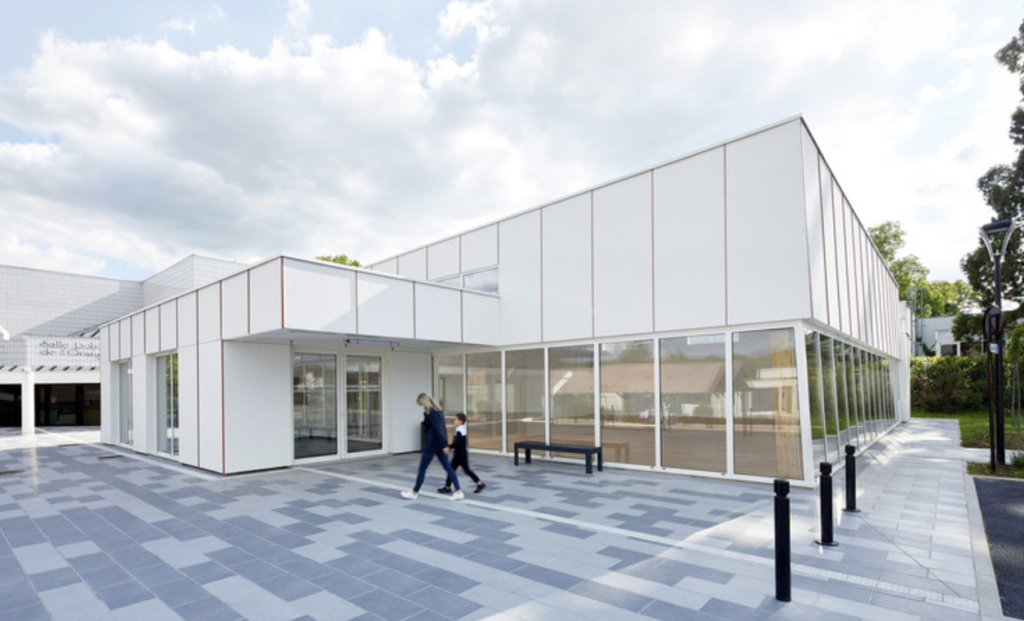
In France, the Pierre Chevet Sports Centre was built using a hybrid timber frame insulated entirely with cast-in-place hempcrete walls. This approach provided the municipal facility with excellent fire protection, consistent indoor acoustic quality, and low operating energy costs, proving that agricultural waste can effectively meet modern commercial building standards.
SUGARCRETE: THE LOW EMISSIONS AGRI-BLOCK
Sugarcrete was developed as a clean alternative to energy-intensive clay bricks and concrete masonry units (CMUs). It is made by combining bagasse: the crushed, fibrous agricultural waste left behind after sugarcane harvesting with a specialized mineral binder. The manufacturing process completely avoids fossil-fueled high-heat kilns. The bagasse fibers are mixed with the mineral binder and compressed cold inside modular molds. This physical compression triggers a fast-acting chemical bonding reaction within the mineral matrix. The block reaches structural handling strength in just 24 to 48 hours and cures completely without requiring external heat energy.
The Structural & Material Advantage
- Lightweight Structural Strength: Sugarcrete blocks achieve a compressive strength of over 4MPa, which matches standard residential concrete blocks. However, they are 4 to 5 times lighter, which cuts down transport energy and manual handling strain on construction sites
- Excellent Fire Insulation: The combination of natural plant fibers and mineral binders gives Sugarcrete an elite fire-resistance rating, keeping structural integrity intact during high-heat fire exposure.
- Low Carbon Footprint: Sugarcrete eliminates up to 170kg of CO2 emissions per cubic meter compared to traditional brick production, providing a viable option for low-carbon building designs.
Logistical Perspective & Civic Application
Sugarcrete helps bridge the gap between global industrial infrastructure and agricultural economies. In sugarcane-producing regions throughout the global south, bagasse is typically treated as a waste product and burned in open fields, causing significant local air pollution.
Using Sugarcrete turns this waste liability into a valuable building asset. It allows agricultural communities to manufacture their own affordable, high-quality building blocks locally, creating new jobs and supporting regional economic self-reliance. It is an ideal choice for modular housing partitions, lightweight commercial roof slabs, and agricultural storage facilities.
Real-World Case Study
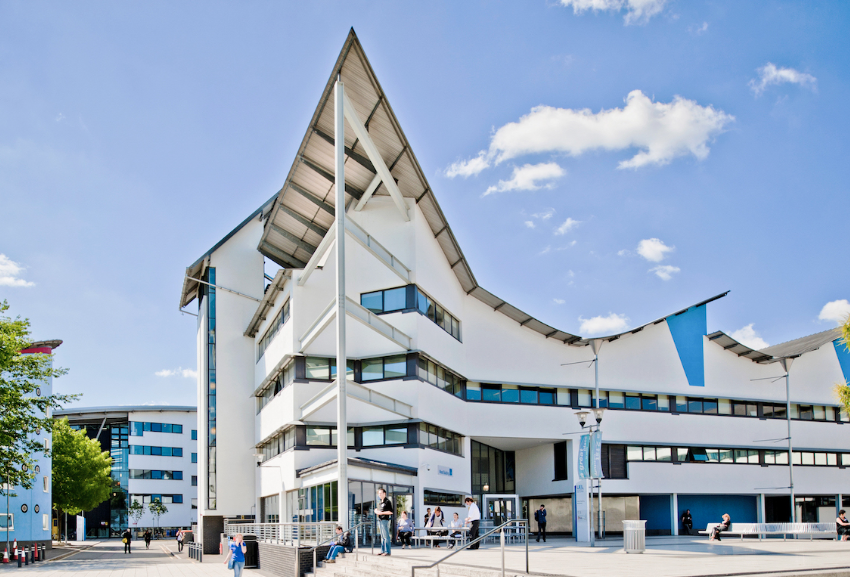
The development teams at the University of East London, working alongside industry partner Tate & Lyle Sugars, successfully designed and tested modular Sugarcrete floor slabs. The interlocking structural blocks utilise geometric patterns to distribute structural loads without requiring steel reinforcements, demonstrating a scalable model for low-carbon, low-cost building systems.
THE SHIFT BEYOND CEMENT
The transition away from Portland cement is not a compromise or a retreat to primitive building methods. It represents a technological evolution. As we face an era defined by resource scarcity and rising climate penalties, continuing to build exclusively with traditional concrete is no longer an engineering standard; it is a design failure.
The ultimate goal of green architecture is not to build with zero impact, but to design infrastructure that leaves the surrounding environment better than it was found. The blueprints are ready; it is time for the construction sector to execute them.
CITATIONS
Davidovits, J. (1978). Recent development in geopolymer concrete: A review. Geopolymer Institute Library, Technical Paper No. 11.
MDPI Crystals Editorial. (2022). Geopolymer Concrete: A Material for Sustainable Infrastructure Development. Crystals, 12(4), 514.
Glasby, T., Day, J., Genrich, R., & Aldred, J. (2015). EFC Geopolymer Concrete Aircraft Pavements at Brisbane West Wellcamp Airport. Concrete 2015 Conference Proceedings, Melbourne, Australia.
Bligh Tanner Consulting Engineers. (2014). Development of Geopolymer Precast Floor Panels for the Global Change Institute at University of Queensland. GCI Technical Infrastructure Report. ScienceDirect Editorial. (2024). Emerging trends in sustainable building materials: Rammed earth construction. Case Studies in Construction Materials, 20, e01772.
Hughes, R. (2021). The Strata of Context: The Nk’Mip Desert Cultural Centre Monolithic Rammed Earth Wall. Architectural Record / Spatial Construction Reviews, 44. Gutierrez, A., Chandler, A., & Ayati, B. (2021). Sugarcrete®: Sustainable Arable By-Product Building Blocks. Sustainability Research Institute (SRI), University of East London (UEL).
International Journal of Sustainable Real Estate and Construction Technology. (2025). Experimental Investigation on Sugarcrete Blocks as a Sustainable Building Material for Low-Rise Construction. IJSR-CT, 14(1), 88–97.
Industrial Crops and Products Journal. (2024). Global Decarbonisation Potentials of Bagasse Agricultural Residues. Elsevier Science Database, 192, 115990. Lemoal Lemoal Architectes. (2021). Pierre Chevet Sports Hall Architectural Engineering Records: Cast-In-Place Interlocking Hempcrete Biocomposites. Croissy-Beaubourg Project Archives.
Centre for Natural Material Innovation, University of Cambridge. (2022). Industrial Hemp as a Carbon-to-Biomass Converter. Cambridge University Engineering Repository, Research Briefing 09.