INDIA’S FORGOTTEN FLOORS: TILING NICHES WORTH BRINGING HOME
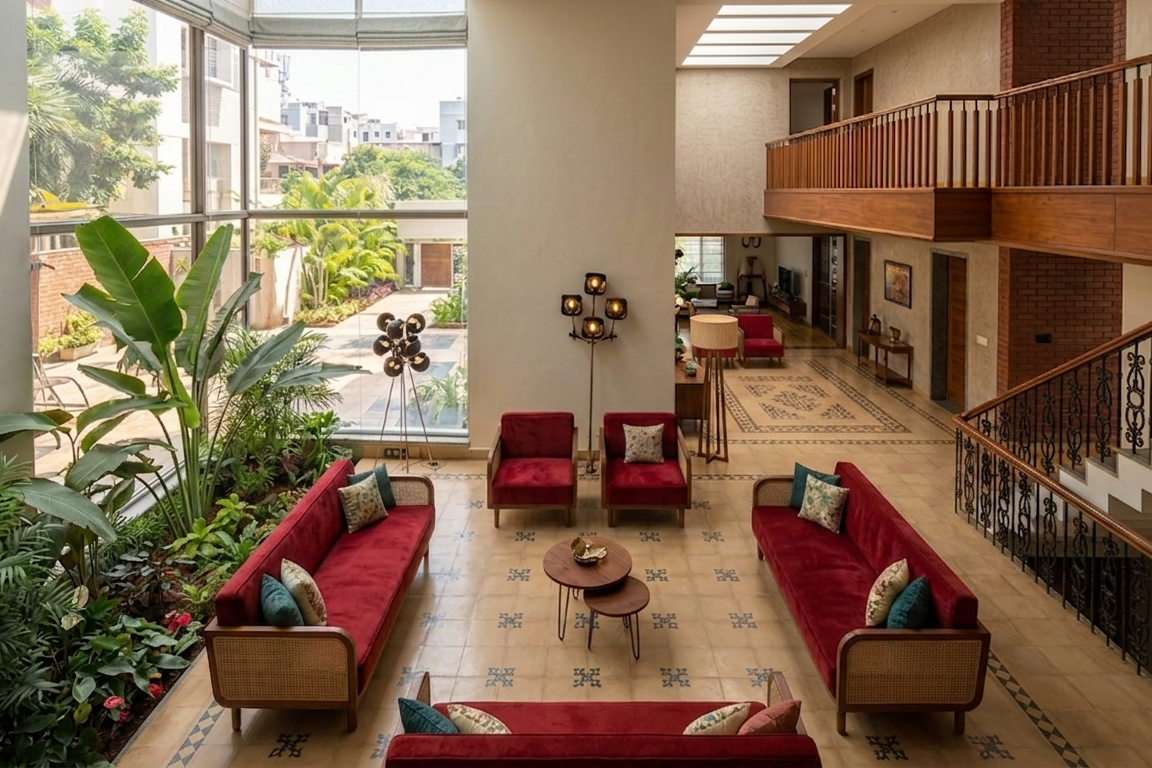
The history of tiling in Indian architecture traces its roots back to the Indus Valley civilisation. From the beginning, the craft was shaped as much by India’s tropical climate as by its cultural ambitions, a functional necessity that gradually evolved into one of the subcontinent’s richest decorative traditions. This journey unfolded through several distinct phases, each leaving behind a legacy that continues to influence Indian architecture today.
From Portuguese-influenced glazed mosaic to Chettinad ceramic craftsmanship, each carry the bones of reason, culture and materials of their timelines. The Oja has curated a selection of India’s most enduring tile niches, ones that continue to breathe through the structures of today.
KAAVI FLOORING: 300 YEAR OLD KERALAN BEAUTY
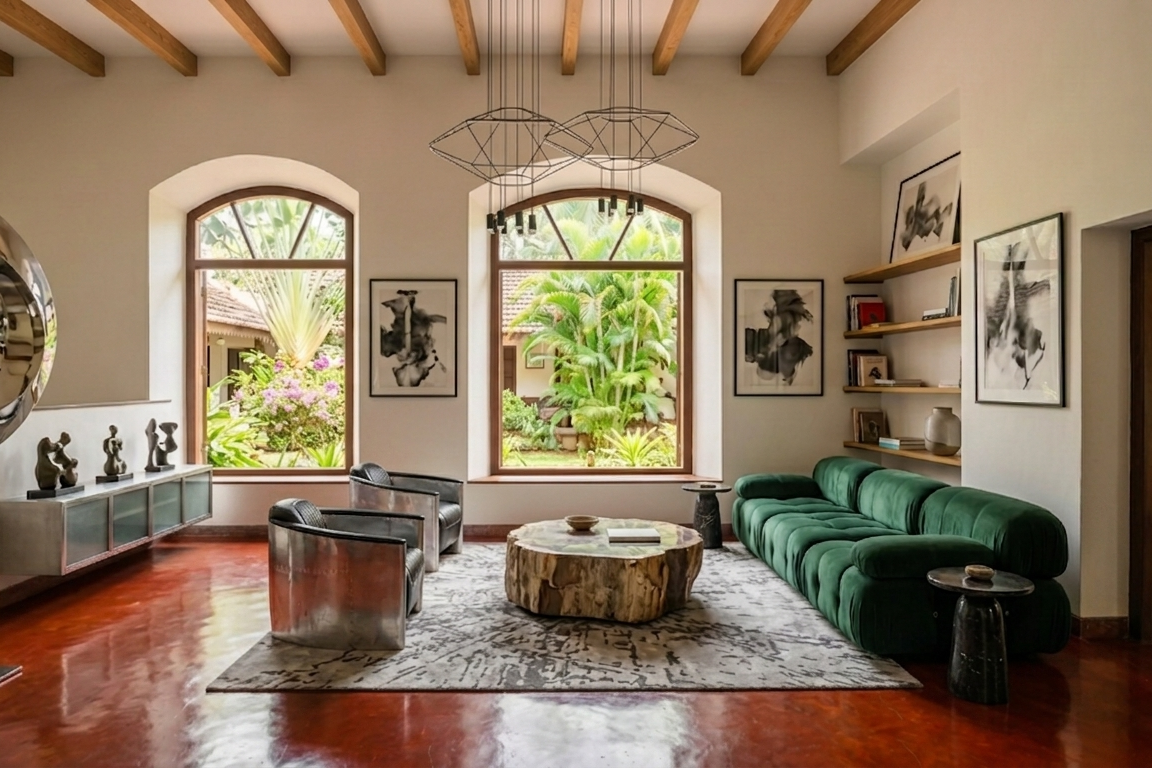
Clean. Classic. Artisanal. Durable. The list goes on. Kaavi flooring is what an ideal tropical dream home would have. This three decade old traditional gem originates from Kerala and coastal Karnataka. Designed to naturally combat extreme summer heat, the method relies entirely on natural materials without chemicals.
Why Kaavi, Oja?
Made with just lime, iron oxide, and coconut oil – no cement, no chemicals, Kaavi develops a mirror-like shine through hand polishing. With use, the surface only gets shinier; footsteps polish it further rather than wearing it down, allowing it to last up to 100 years. Its earthy reddish-brown tone and natural sheen lend a timeless charm, while remaining cool underfoot even during humid summers.
Natural Cooling: Kaavi thinks like a climate. Its lime and natural soil composition breathes with the space it inhabits – absorbing heat rather than reflecting it, leaving the floor ice-cold underfoot even at the peak of an Indian summer. No electricity. No engineering. Just material intelligence, centuries old.
Unmatched Longevity: Kaavi does not age, it deepens. Properly maintained, these floors comfortably outlast a century, growing more lustrous with every decade of use. Where most surfaces surrender to footfall, Kaavi is polished by it. Time, here, is not an enemy but a craftsman.
Honest to the Earth: Every ingredient in Kaavi – lime, iron oxide, coconut oil returns cleanly to the earth it came from. No toxins, no synthetics, no carbon debt. In an era where sustainability has become a selling point, Kaavi has simply always been this way.
ATHANGUDI TILES: CHETTINAD’S LIVING MOSAIC
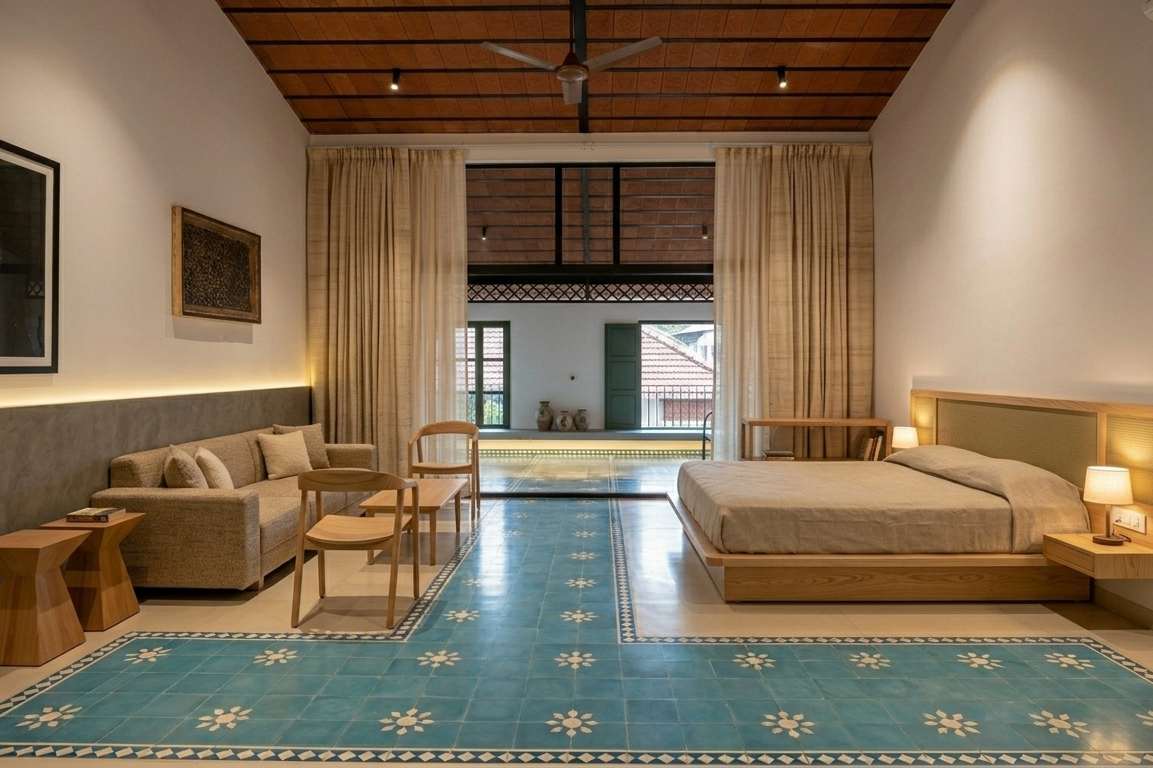
Born in the royal, lavish mansions of a village named Athangudi in the Chettinad region of Tamil Nadu are these Athangudi Tiles. Eco-friendly, vibrant and handmade in nature, these tiles have been a hallmark of Chettiar mansions for over a century. They are celebrated for their distinctive geometric patterns, floral motifs, and unique glass-molding technique.
The resourceful villagers of Athangudi were challenged by the wealthy Chettiars to replicate the intricate, colorful European designs that they’ve encountered in the European mansions back in the colonial period. Blending the insipration and locally available culture and materials, the artisans have given birth to the tile making process so exquisite that it has proudly been passed down for generations.
WHY ATHANGUDI, OJA?
Distinctive Manufacturing Process: Unlike machine-pressed vitrified tiles, Athangudi tiles are handcrafted. Liquid cement and locally sourced sand are poured into a metal frame resting on a glass plate, creating a signature smooth, glossy finish.
Natural Environmental-Friendly Composition: They are made using sustainable, natural oxides, sand, and cement, making them an excellent choice for green building practices.
Aesthetics: They feature bold, rich colours (such as emerald green, mustard, deep blue, and terracotta red) and intricate floral or geometric patterns.
Durability: These tiles are known to last between 70 to 100 years, if installed properly and maintained.
AZULEJOS TILES: GOAN-PORTUGUESE’S SYMBIOTIC BEAUTY
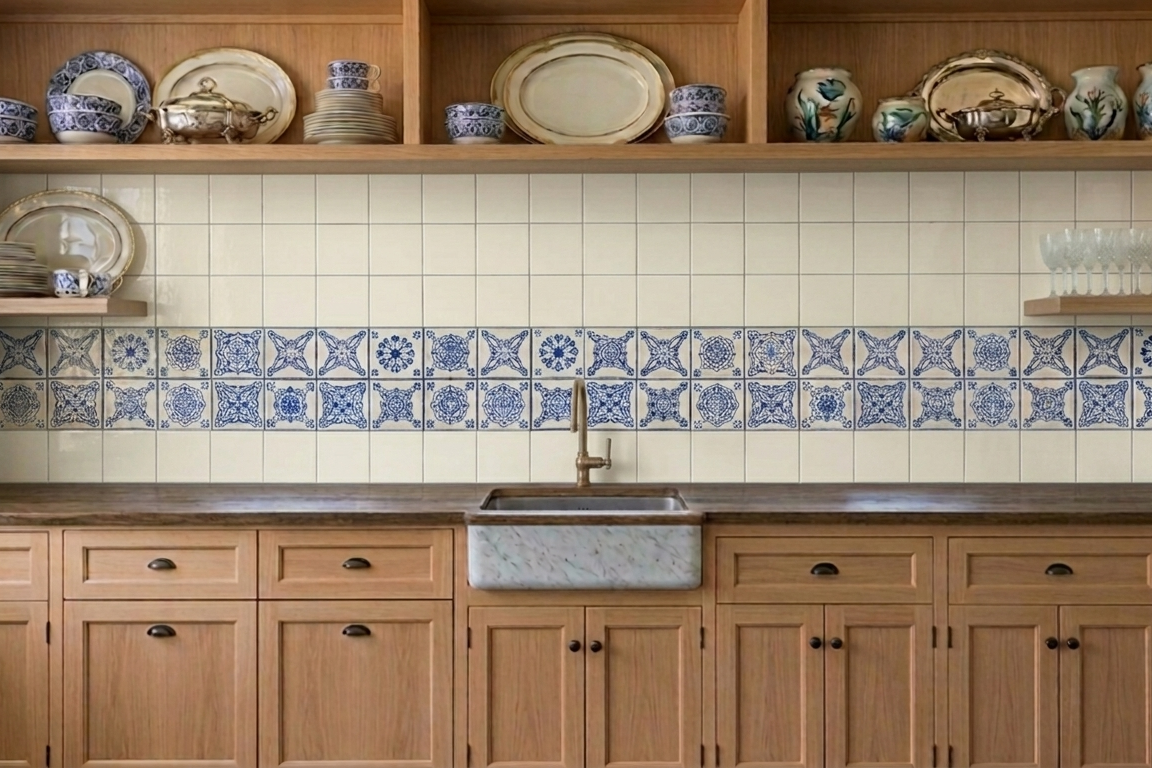
Azulejos (hand-painted, glazed ceramic tiles) were introduced to India by the Portuguese in the 16th century. Primarily found in Goa, these enduring blue-and-white tiles initially came as imports. Today, local artisans preserve and adapt this historical art form with vibrant, indigenous storytelling. Originally used to insulate homes from coastal dampness and extreme monsoons, these tiles have transitioned into decorative nameplates, murals, and lifestyle merchandise.
Made from a refined blend of local earthenware clay, molded flat, and sun-dried before a preliminary kiln firing to create a rigid, porous base, this beauty is later dipped into a liquid glaze primarily composed of tin oxide and lead silicate, which dries into a powdery, canvas-white matte surface. Artists later paint directly onto the unfired, wet glaze using natural metal oxides such as:
- Cobalt Oxide: Yields the signature vibrant blue.
- Copper Oxide: Yields rich greens.
- Manganese: Yields deep browns and blacks.
WHY AZULEJOS, OJA?
Climate Armor: Designed as a “building envelope,” the non-porous glass facade shields highly porous local laterite stone walls from severe tropical monsoon moisture
Thermal Insulation: The glossy white tin-glaze reflects high solar radiation, naturally cooling interior spaces in intense coastal climates.
Extreme Longevity: Because the pigments are chemically fused inside the glass layer rather than painted on top, the tiles never fade from UV sun exposure, scratches, or salt-air corrosion.
Low Maintenance & Hygiene: The slick, vitrified surface resists the growth of tropical mold, moss, and algae, requiring only water to wipe clean.
Note*: While the production of azulejos demands a front-loaded carbon footprint due to high-temperature kiln firings, the material pays back its ecological debt through centuries of passive thermal cooling, non-toxic permanence, and a total absence of synthetic microplastics.